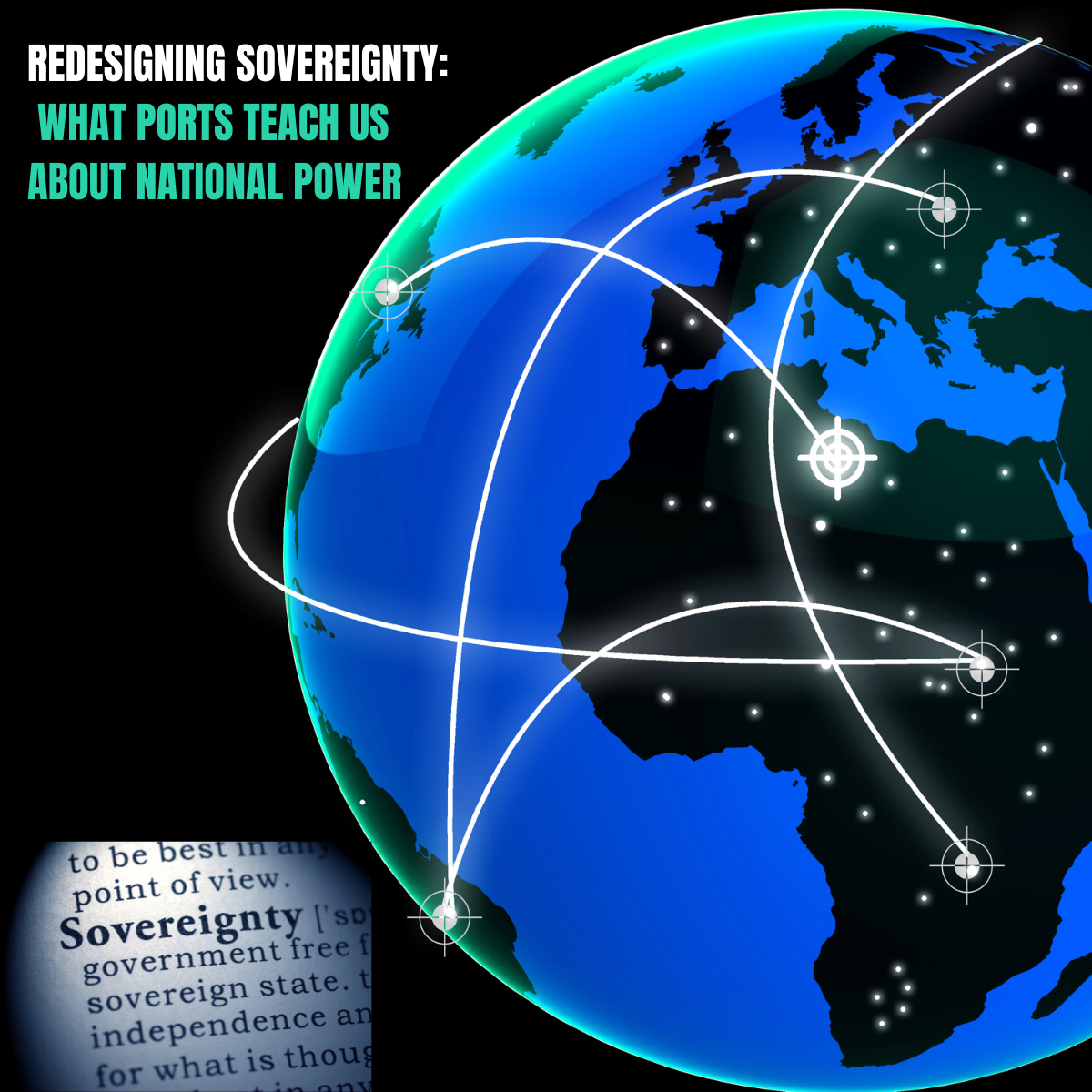
Supply chains aren’t lines anymore. They’re proving grounds.
For those of us working in energy, critical minerals, manufacturing, or logistics, a structural shift has been underway for several years now. I first wrote about this pattern in 2021, framing it not as an energy transition but as a commodities transition — a reordering of how materials, power, and industrial capacity relate to one another.
What has become clearer since then is the scope of this integration. Energy systems, critical mineral supply chains, domestic manufacturing capacity, and logistics infrastructure are no longer operating in parallel with occasional points of intersection. They are becoming a single interdependent system.
This has significant implications for how organizations in these sectors position themselves, allocate capital, and structure partnerships.
A Structural Integration
Consider what is occurring simultaneously across these domains:
Energy infrastructure is being reshaped by demand patterns that few anticipated a decade ago. Data center electricity consumption in the United States is projected to nearly triple by 2030, from approximately 50 gigawatts to over 130 gigawatts. In Virginia alone, data centers now consume 26% of total electricity supply. This is not primarily a decarbonization story — it is an energy security, affordability, and grid resilience story.
Every major port, shipyard, and industrial facility is making energy infrastructure decisions that will lock in capacity requirements for decades.
Critical minerals — lithium, cobalt, rare earths, copper — have moved from commodity market dynamics to strategic asset considerations. The supply chains for these materials now carry national security weight. Extraction, processing, and verified sourcing determine which nations and which firms can build the next generation of batteries, advanced motors, and defense systems. The IEA and OECD have both released substantive reports this year on traceability requirements for critical mineral supply chains — a signal of how central verification infrastructure has become.
Manufacturing capacity is being reshored, but unevenly and with significant interdependencies. Shipbuilding, steel production, semiconductor fabrication, and advanced materials manufacturing are competing for the same workforce, the same capital, and the same policy attention. The industrial base is not rebuilding as a collection of independent sectors. It is rebuilding as a system where constraints in one domain propagate to others.
Logistics infrastructure — ports, intermodal networks, shipping capacity — remains the physical layer connecting these systems. But the role of logistics is expanding. Ports are no longer measured solely by throughput efficiency. They are nodes in an energy-mineral-manufacturing ecosystem that requires coordination across domains that historically operated independently.
None of these systems can achieve scale in isolation. A shipyard cannot build vessels without verified steel and critical mineral inputs. A critical minerals project cannot attract patient capital without traceability infrastructure demonstrating chain of custody. A port cannot modernize without coordinating energy systems, cargo flows, and compliance requirements simultaneously.
Verification as the Binding Layer
What distinguishes this integration from previous cycles of industrial development is the role of verification infrastructure.
In an integrated industrial system, value increasingly flows to organizations that can prove what they are moving — not merely move it. A shipment of rare earth concentrate may pass through five jurisdictions before processing. Gold is recast multiple times before reaching a vault. Copper concentrate blends and reblends until documentation no longer corresponds to material composition.
Regulators require proof of origin and compliance. Buyers require certainty about material provenance. Investors seek to avoid hidden supply chain risk. These are not new requirements, but the infrastructure to meet them at scale — traceability systems, chain-of-custody protocols, molecular-level verification, compliance documentation that survives material transformation — is only now maturing.
NIST is developing federal frameworks for manufacturing supply chain traceability. Private sector firms are building verification technologies that embed identity at the material level. Investment in this infrastructure is accelerating across multiple sectors.
This is not a peripheral development. Verification is becoming the trust layer for the entire industrial system — the infrastructure that enables capital to flow, regulatory approval to proceed, and market access to open.
Implications for Operators and Investors
For those leading ports, infrastructure projects, energy initiatives, or investment strategies in these sectors, several implications follow:
Competitive position increasingly depends on connections beyond organizational boundaries. A port’s strategic value now depends on its energy infrastructure, its digital systems, its workforce pipeline, and its relationships with upstream and downstream participants in the mineral-manufacturing chain. Optimizing internal operations while neglecting external coordination yields diminishing returns.
Capital is seeking system-level positioning rather than point solutions. Sophisticated investors are evaluating interdependencies: Does the workforce pipeline exist to support this shipyard investment? Is the logistics infrastructure in place to move product from this minerals project? Does this port expansion connect to the energy and manufacturing systems that will drive future demand? Projects that can demonstrate how they integrate into the broader system — and identify their coordination partners — will attract capital more efficiently.
Verification capability is becoming a source of competitive differentiation. Organizations that can demonstrate provenance, prove compliance, and provide auditable chain of custody are moving into a premium category. Those relying on legacy documentation and inference will face increasing friction — in regulatory approval, in customer confidence, and in access to capital.
Coalition-building has become a strategic requirement. No single organization — port, shipyard, minerals company, or energy provider — can construct this system independently. Success will accrue to those who develop trusted relationships with partners across adjacent sectors and assemble the multi-stakeholder coalitions capable of advancing integrated projects.
The Work Ahead
The policy momentum supporting this convergence is substantial. Within the past several weeks alone:
- The National Security Strategy explicitly framed economic security as national security and called for rebuilding domestic industrial capacity.
- The Genesis Mission executive order marshalled federal scientific resources around AI, advanced manufacturing, critical materials, and energy — the largest coordinated federal research effort since the Apollo program.
- The SHIPS Act continues advancing through Congress with bipartisan support.
- Maritime executive orders have established new offices, trust funds, and workforce initiatives aimed at shipbuilding revitalization.
These are not isolated policy actions. They reflect a recognition — across political and institutional boundaries — that energy, minerals, manufacturing, and logistics must be treated as an integrated system rather than separate domains.
Policy momentum creates windows, however, not necessarily outcomes.
The organizations positioned to benefit most from this moment are those undertaking the integration work now: mapping how these systems connect within their specific operational context, identifying the partners required for coordinated action, and building the verification and coordination infrastructure that transforms policy momentum into operational capability.
Coalition-building efforts are emerging to support this work — bringing together operators, investors, and policymakers who recognize this convergence and seek to identify where the genuine leverage points exist. The objective is not to address each domain in isolation, but to understand how they connect and where coordinated action can unlock value that isolated efforts cannot.
The industrial logistics map is being redrawn. The relevant question for each organization is whether it is contributing to that redrawing — or waiting to discover where it has been placed.
—Beatriz
Dr. Beatriz Canamary Founder & CEO, SuRe Strategy Group | Next Wave Systems Scaling innovation in legacy industries
Comments are closed